What Is a SWOT Analysis?
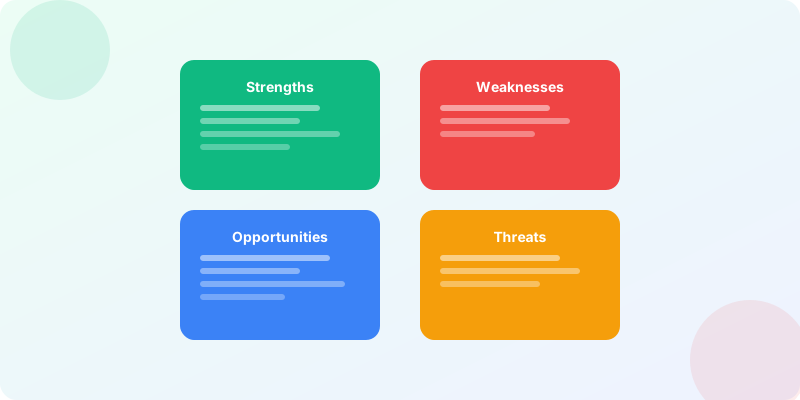
SWOT stands for Strengths, Weaknesses, Opportunities, and Threats. It's a strategic planning framework that helps you evaluate where you stand and where you're headed. Strengths and weaknesses are internal — things you control. Opportunities and threats are external — things the market, competitors, or environment throw at you.
The framework dates back to the 1960s at Stanford Research Institute. Six decades later, it's still one of the most widely used strategy tools in business, education, and personal development. Why? Because it forces honest assessment in a format that fits on a single page.
Below are 12 SWOT analysis examples covering different industries and contexts. Each one follows the same 2×2 grid format — steal the structure, fill in your data, and generate the visual at swot analysis maker.
Startup SWOT Examples
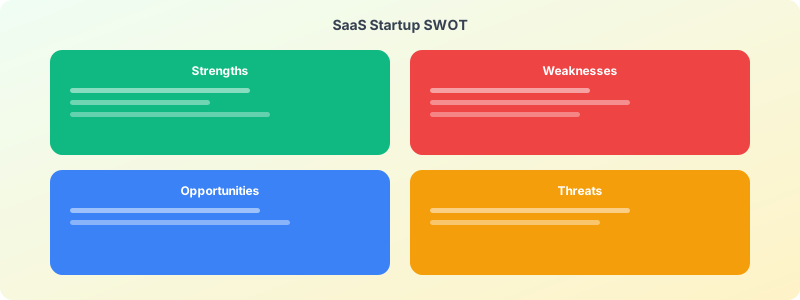
Example 1: SaaS startup entering a crowded market. Strengths: novel AI feature, lean team, fast iteration speed. Weaknesses: no brand recognition, limited runway (8 months), small support team. Opportunities: incumbents are slow to adopt AI, remote work trend expanding TAM. Threats: well-funded competitor launching similar feature, potential regulation on AI tools.
Example 2: E-commerce startup. Strengths: unique product line (handmade), strong Instagram following (50K). Weaknesses: no physical retail, high shipping costs, single supplier. Opportunities: growing demand for sustainable products, TikTok Shop expansion. Threats: Amazon launching private label in the niche, supply chain disruptions.
Example 3: Fintech startup. Strengths: banking license, experienced founding team from Goldman Sachs. Weaknesses: no consumer brand, complex regulatory requirements. Opportunities: Gen Z underbanked population, open banking APIs. Threats: established neobanks (Revolut, Chime), interest rate environment.
Startups typically have strong opportunity quadrants and weak internal quadrants — the SWOT makes this imbalance visible, which is exactly the point.
Marketing SWOT Examples
Example 4: Digital marketing agency. Strengths: SEO expertise (avg client ranks page 1 in 4 months), case studies. Weaknesses: no paid ads capability, high client churn (6-month avg retention). Opportunities: AI content tools reducing production costs, video marketing growing 30% YoY. Threats: clients bringing marketing in-house, economic downturn cutting ad budgets.
Example 5: Product launch campaign. Strengths: existing email list of 25K subscribers, product-market fit validated in beta. Weaknesses: $5K marketing budget (vs competitor's $500K), no influencer relationships. Opportunities: competitor just raised prices 40%, review sites open to new submissions. Threats: product hunt launch day competition, negative early reviews could tank momentum.
Marketing SWOTs work best when tied to a specific campaign or quarter, not as a vague annual exercise. Pair your SWOT with a timeline maker to map actions to dates.
Career and Personal SWOT Examples
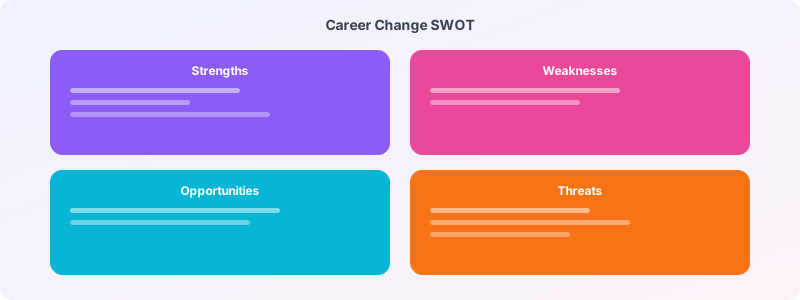
Example 6: Job seeker switching industries. Strengths: 8 years management experience, MBA, strong network. Weaknesses: no technical skills in target industry, overqualified for entry-level roles. Opportunities: industry growing 15% annually, companies value cross-industry perspective. Threats: younger candidates with relevant degrees, AI automating some target roles.
Example 7: Freelancer evaluating next year. Strengths: niche expertise (healthcare UX design), repeat clients. Weaknesses: no passive income, feast-or-famine revenue cycle, poor at sales. Opportunities: healthcare tech funding at all-time high, can productize knowledge into courses. Threats: agencies undercutting on price, burnout risk from solo work.
Personal SWOTs work best when brutally honest. The weakness quadrant is where most people cheat — be specific. "Could improve communication" means nothing. "Lost two clients last year because I missed deadlines" is actionable.
Education and Nonprofit SWOT Examples
Example 8: University department. Strengths: top-10 ranked program, tenured faculty with industry connections. Weaknesses: declining enrollment (-12% over 3 years), outdated curriculum. Opportunities: online degree demand, industry partnerships for capstone projects. Threats: MOOCs offering cheaper alternatives, state funding cuts.
Example 9: Nonprofit organization. Strengths: 20-year track record, strong donor base, passionate volunteers. Weaknesses: executive director leaving, technology stack from 2015, no succession plan. Opportunities: corporate CSR budgets increasing, viral social media campaigns for similar causes. Threats: donor fatigue post-pandemic, competing nonprofits in same space.
For education and nonprofit examples, the "threats" quadrant often includes funding — which makes the SWOT a useful tool when presenting to boards or grant committees. Visualize it at swot analysis maker and export for your next presentation.
Industry-Specific SWOT Examples
Example 10: Restaurant. Strengths: prime downtown location, chef with TV appearances, loyal regulars. Weaknesses: high rent, 30% food waste, no delivery infrastructure. Opportunities: ghost kitchen model for delivery, catering corporate events. Threats: food delivery app fees (30%), minimum wage increases, new competitor opening across the street.
Example 11: Real estate agency. Strengths: 15 years local market knowledge, 200+ Google reviews (4.8 stars). Weaknesses: no commercial real estate experience, website ranks poorly. Opportunities: housing shortage creating seller demand, virtual tour technology. Threats: Zillow/Redfin disrupting traditional agents, rising interest rates cooling market.
Example 12: Healthcare clinic. Strengths: 3 board-certified specialists, insurance partnerships, modern facility. Weaknesses: long wait times (avg 3 weeks), poor online appointment system. Opportunities: telehealth expansion, aging population in service area. Threats: hospital system opening competing clinic, malpractice insurance cost increases.
Ready to build?
Open the free editor and start creating — no signup needed.
How to Write a Good SWOT Analysis
Be specific, not vague. "Good team" is worthless. "Team has shipped 3 products in 18 months with zero downtime" is a strength you can build on. Every item should pass the "so what?" test — if someone reads it and shrugs, it's not specific enough.
Limit each quadrant to 3-5 items. A SWOT with 15 weaknesses isn't analysis — it's a complaint list. Force-rank and keep only the items that actually influence your next decision.
Connect quadrants. The real insight comes from combinations: Can a strength exploit an opportunity? Does a weakness amplify a threat? Draw lines between related items. Our flowchart maker can help map these relationships visually.
Update regularly. A SWOT from 6 months ago is fiction. Markets move, teams change, competitors pivot. Revisit quarterly at minimum. Use comparison maker to compare your current SWOT against last quarter's.
Build with Composite Widgets
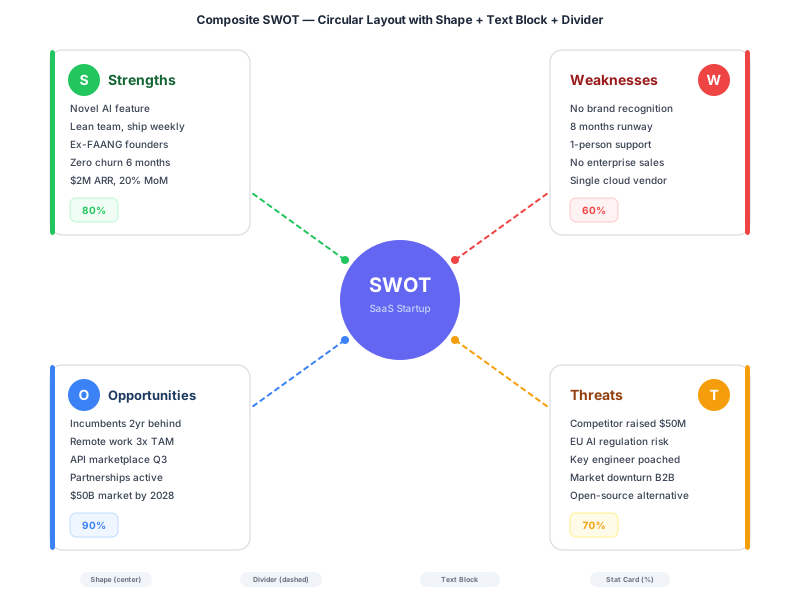
The SWOT widget gives you a clean 2x2 grid — but what if you want a radial layout, score badges, or a dark dashboard? Use composite widgets in editor to build any SWOT layout from scratch.
This circular layout uses a Shape widget for the center, Divider widgets for the dashed connectors, Text Block widgets for the items, and Stat Card widgets for the percentage scores. Every element is independently editable.
Dark Canvas SWOT with Scores
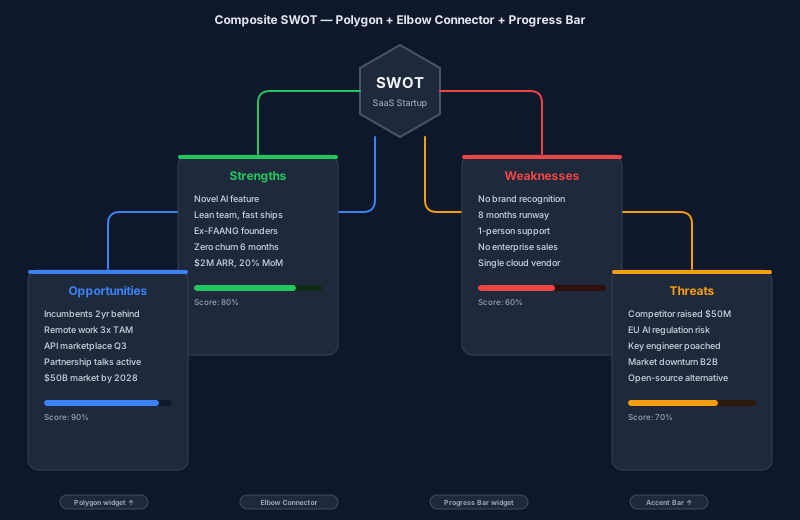
This dark variant uses a Polygon widget (hexagon) for the center, Elbow Connector widgets for clean routing to each card, Accent Bar widgets for the colored strips, and Progress Bar widgets for the visual scores. The result looks like a strategy dashboard — not a basic SWOT grid.
You don't need a dedicated SWOT widget to make a SWOT. Four cards arranged around a center element IS a SWOT. The editor canvas gives you pixel-level control over every element.
Build Your SWOT Analysis
For a quick SWOT, open swot analysis maker — fill in the four quadrants, pick a color scheme, and export as PNG. No signup needed.
For a custom design, open editor and build from composite widgets. Browse templates for pre-built business strategy layouts.
For more strategy frameworks, check our how to create infographic guide or explore comparison maker for side-by-side evaluations.