What Is a SWOT Analysis (and Why Should You Care)?
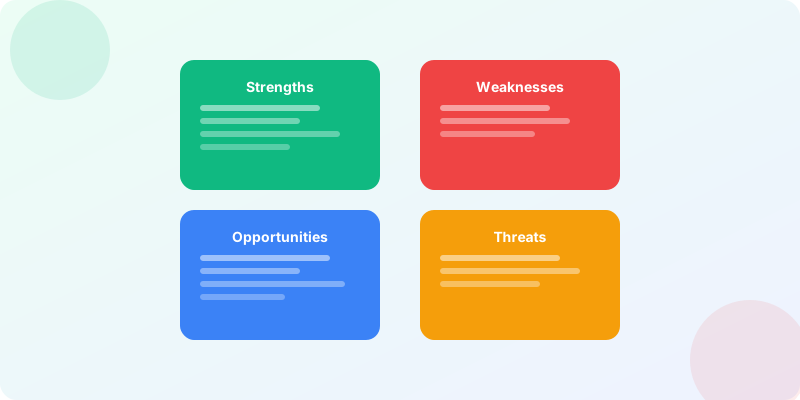
A SWOT analysis is a strategic planning framework that evaluates four dimensions of a business, project, or idea: Strengths, Weaknesses, Opportunities, and Threats. The first two are internal factors you can control. The last two are external forces you need to respond to. Put them together in a simple 2x2 grid, and you get a surprisingly powerful snapshot of where things stand.
The framework dates back to the 1960s, when Albert Humphrey at the Stanford Research Institute developed it as part of a research project on corporate planning. Six decades later, it remains one of the most widely used strategic tools in business, education, and nonprofit management. The reason is simple: it forces you to think systematically about your situation instead of relying on gut feeling.
SWOT analyses show up everywhere — startup pitch decks, annual business reviews, product launch plans, competitive research, personal career planning, and academic assignments. If you've ever been asked to "assess the landscape" before making a decision, a SWOT analysis is probably the fastest way to do it.
When to Use a SWOT Analysis
Not every decision needs a SWOT analysis, but many important ones benefit from it. Use it when you're launching a new product and need to understand your competitive position. Use it when you're entering a new market and want to map out what could go right and what could go wrong. Use it during annual strategic planning to take stock of where your organization stands.
SWOT is also valuable for smaller decisions. Evaluating a new marketing channel? Map your strengths against the opportunity. Considering a partnership? Identify what each party brings and where the risks lie. Even personal career decisions become clearer when you lay out the four quadrants honestly.
The key is timing. A SWOT analysis works best at the beginning of a planning process, not the end. It's a diagnostic tool, not a prescription. If you need to compare two specific options side by side, check out our guide on how to make comparison infographic, or try comparison maker.
How to Identify Strengths and Weaknesses
Strengths are internal advantages — things your organization does well or resources you have that competitors don't. Ask: What do we do better than anyone else? What unique resources or capabilities do we have? What do customers say they love about us? Be specific. "Good team" is not useful. "Engineering team with 3 former Google leads and 12 patents" is actionable.
Weaknesses are internal limitations. This is the quadrant people rush through because it's uncomfortable. Don't. Ask: Where do we consistently lose deals? What do customers complain about? What capabilities are we missing? Every weakness you identify is a potential area for improvement — or at minimum, a risk you can plan around.
Common strengths include: proprietary technology, brand equity, loyal customers, cost advantages, strategic partnerships, and strong cash reserves. Common weaknesses include: limited budget, outdated technology, high turnover, gaps in product features, dependency on a single revenue stream, and poor online presence. Be brutally honest — a SWOT analysis you sugarcoat is a SWOT analysis that wastes everyone's time.

How to Identify Opportunities and Threats
Opportunities are external factors you could exploit to your advantage. These come from market trends, regulatory changes, competitor missteps, technological shifts, or emerging customer needs. The key word is external — opportunities exist whether or not you act on them. Your job is to spot them and figure out which ones align with your strengths.
Threats are external factors that could harm your position: new competitors, changing consumer preferences, economic downturns, supply chain disruptions, regulatory crackdowns, and rising costs. Threats are not weaknesses — they're things happening in the world around you.
For both quadrants, look beyond the obvious. Read industry reports, follow competitor news, track regulatory developments, and talk to customers about what else they're evaluating. The best SWOT analyses surface insights that aren't already common knowledge in your organization.
Real SWOT Analysis Examples
E-commerce company selling sustainable home goods. Strengths: strong brand loyalty, proprietary supplier relationships, 4.8-star average review. Weaknesses: limited marketing budget vs large retailers, no physical retail, slow shipping. Opportunities: 20% YoY market growth for sustainable products, B2B channel potential, social commerce features. Threats: Target/Walmart launching sustainable lines, greenwashing regulation, rising shipping costs.
Freelance designer considering healthcare specialization. Strengths: 8 years experience, 3 existing healthcare clients, HIPAA knowledge. Weaknesses: no formal credentials, limited healthcare network, website doesn't showcase healthcare work. Opportunities: telehealth expansion increasing marketing spend, few designers specialize in healthcare niche. Threats: AI design tools, large agencies bundling design into full-service contracts.
Notice how each example uses specific, concrete details rather than generic statements. That's what makes a SWOT analysis actually useful. Build yours at swot analysis maker or start from swot analysis.
Ready to build?
Open the free editor and start creating — no signup needed.
Common SWOT Analysis Mistakes
Being too vague. Entries like "great product" or "competitive market" tell you nothing actionable. Every item should be specific enough that someone unfamiliar with your business could understand what it means and why it matters.
Confusing internal and external factors. High employee turnover is a weakness, not a threat. A new competitor entering the market is a threat, not a weakness. This distinction matters because internal factors can be fixed with internal action while external factors require strategic positioning.
Creating lopsided analyses — listing 15 strengths and 2 weaknesses. Aim for balance. If your strengths list is three times longer than your weaknesses list, you're not being honest enough. A good rule of thumb is 4-8 items per quadrant.
Treating the SWOT as a finished product. It's a starting point. The real value comes from the strategic conversations it sparks. After completing the grid, ask: How can we use strengths to capture opportunities? How can we shore up weaknesses before threats exploit them? That's where strategy begins.
How to Build a SWOT Analysis Step by Step
Step 1: Define the scope. What exactly is the SWOT about — the whole company, a single product, a new market entry, a career change? A SWOT without a clear subject produces vague, unusable output. Write the subject as a single sentence at the top before you list anything.
Step 2: Brainstorm internal factors (Strengths and Weaknesses). Internal means things you control — your team, your product, your finances, your brand, your processes. Don't filter yet; get everything on the page. Aim for 8-12 items per category in the raw brainstorm.
Step 3: Brainstorm external factors (Opportunities and Threats). External means things outside your control — market trends, competitors, regulation, technology shifts, customer behavior. Again, don't filter yet. A good SWOT pulls from industry reports, customer feedback, and competitor analysis, not just internal opinions.
Step 4: Prioritize each list down to 4-8 items. For each quadrant, keep only the items that are genuinely material to your decision. "Has a website" is not a strength. "Ranks #1 organically for a category keyword driving 40% of pipeline" is a strength.
Step 5: Open swot analysis maker and enter your items into the four quadrants. Color-code by severity or importance if helpful. The 2x2 grid renders automatically.
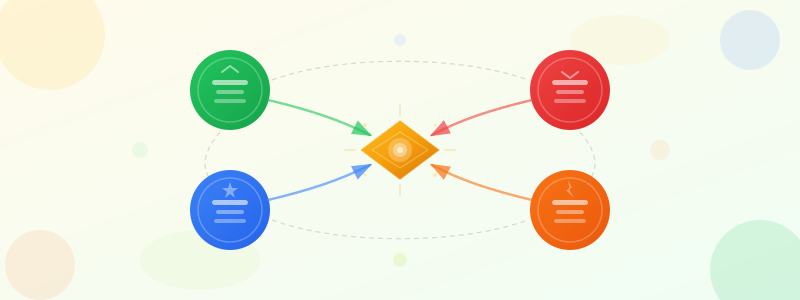
Step 6: Review and translate into action. A SWOT grid is not the end product — it's the input for strategic decisions. After filling it in, answer: which strengths can capture which opportunities? Which weaknesses leave us exposed to which threats? Export the grid as PNG and include it in the document that captures those decisions.
Build Your SWOT Analysis
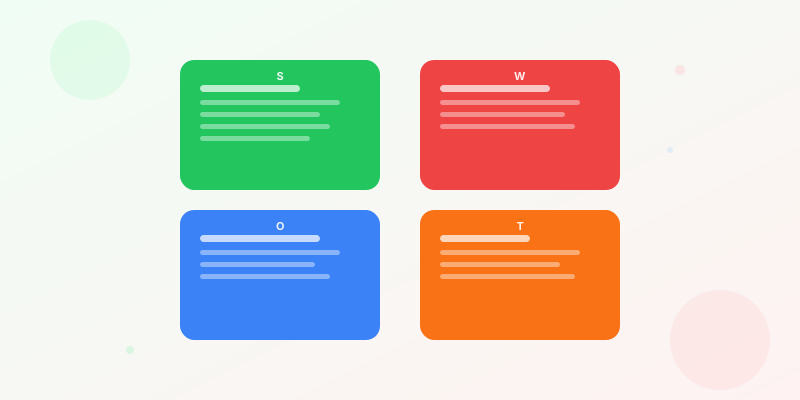
Our swot analysis maker handles all the design decisions — just type in your content and get a presentation-ready 2x2 grid. Color-coded quadrants (green/red/blue/orange), clean typography, and export as PNG. No signup needed.
Want the SWOT as part of a larger strategic document? Open the editor and combine the SWOT widget with stat cards, comparison bars, and charts. Start from the swot analysis template for a pre-built layout with supporting widgets. All 60+ widget types work together on one canvas.